Updated July 16, 2026 at 6:00 AM EDT
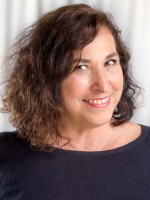
For more than 30 years, independent journalist Amy Goodman has reported from around the globe. Democracy Now!, the show she co-created and co-hosts, runs online and on public and community TV and radio stations. Now, Goodman is the subject of a documentary that's been distributed independently and has been selling out its last theatrical screenings before it moves to streaming in the fall.
The film shows how Goodman is always on the move, always asking questions. That's apparent even in the opening scene, as she pursues Donald Trump's then-climate adviser Wells Griffith during the 2018 United Nations Climate Summit.
"Can you tell us what you think about President Trump saying that climate change is a hoax?" she asks. And when she gets no response, she adds, "Are you not talking to the press while you're here?"
Wells tries to dodge her, but Goodman doesn't give up. She runs after him, up stairs and down corridors until he ducks behind a locked door.
The documentary shows Goodman questioning other people in power, and talking with people on the ground, during times of social and political unrest.
"It came from my Jewish education, that you ask questions," Goodman says. There are clips of her talking from Ground Zero after the 9/11 terrorist attacks in New York, from Haiti and from a death row prison in Georgia, alongside footage of her interviewing journalists inside the Gaza Strip.
"She's fearless," says actress and activist Jane Fonda. "I was in awe, watching the film. It shows her just relentlessness."
Fonda told NPR she was so impressed with the documentary, she signed on to be an executive producer. Fonda relaunched her father Henry Fonda's Committee for the First Amendment and says Democracy Now! is a vital alternative media program.
"I bow before Amy Goodman," says Fonda. "She has been so important to American democracy, showing people what independent journalism looks like. It takes courage. That's Amy Goodman. It takes stamina. That's Amy Goodman."
The film was made by Tia Lessin and Carl Deal, known for their collaborations with director Michael Moore. Over the years, Goodman had interviewed the duo about their award-winning films such as Trouble the Water and The Janes. For this documentary, they focused their cameras on Goodman and her career.

"We started making it in earnest after the president in his first term proclaimed that the press was the enemy of the people, which was just outrageous and chilling," says Lessin.
She says they wanted to shadow the work of the investigative journalist who's faced criticism, attacks and arrests for her reporting.
"She calls us her two Academy Award nominated stalkers," says Lessin. "She let us in for a couple of years to follow her. So off I went, chasing after Amy Goodman as she chased after the politicians, the billionaires."
Deal says they went "from being filmmaker and subject, to chasing Amy and just trying to keep up."
In fact, Lessin says, "we were going to call the film Chasing Amy at one point, but the title was taken."
Instead, they called it Steal this Story, Please!, in part a send-up of Abbie Hoffman's revolutionary handguide Steal this Book. More specifically, the film's title is taken from one of Democracy Now's missions: Steal This Story — to dare other media outlets to cover the stories they do.
The film includes 30 years of archival footage from Democracy Now! including Goodman facing down soldiers in Nigeria and reporting on Native Americans protesting an oil pipeline in North Dakota.
In one harrowing account from 1991, Goodman recounts how she and reporter Allan Nairn were eyewitnesses to a massacre by Indonesian troops during a memorial procession in East Timor.
Goodman recalls how soldiers killed hundreds of pro-independence demonstrators, and severely beat her and Nairn — leaving him with a fractured skull.
Their reporting sparked international outrage and helped propel Goodman's career.
Some of her critics call her a left-wing activist. But to her supporters, Goodman's journalism is uncompromising — rooted in her refusal to take any government funding, corporate sponsorship, underwriting or advertising revenue for her show.
"You don't mess with Amy Goodman," says radio producer Dave Isay, who appears in the film. Isay is familiar to NPR audiences for creating StoryCorps, the oral history project that airs on "Morning Edition."
When we meet up in Brooklyn, Isay tells me Goodman is one-of-a-kind.
"I don't agree with all of Amy's politics. I agree with some of them," he says. "But you can't help but respect the spirit and the conviction in someone like Amy, who has such a strong moral compass. She'll take any risk. She'll climb any mountain. She's an old school, hard-nosed, tough journalist."
Isay says he owes much of his career to Goodman— he ditched medical school to go into radio after she encouraged him to pursue a story other news outlets rejected. Goodman has mentored many other journalists too. In fact, Isay and I both met her in the late 1980s at the Pacifica radio station in New York where she produced the evening news.
At the Democracy Now! studio in Manhattan, my editor and I meet up with Goodman, who I have not seen in years. I remind her she taught me how to cut tape with a razor blade and splicing tape on the old reel-to-reel tape recorders back in the day, at WBAI.
She sits down with us to talk about her brand of journalism, without the typical pundits. "Not to hear the same old, same old, but to hear original thinkers talking about how we deal with the huge problems of the world," she says. "This is what independent media looks like as the corporate media both crumbles and consolidates."
For decades, Goodman's reporting has focused on political and social movements around the globe.
"I've always believed that those who care about war and peace, who care about racial and economic justice, who care about LGBTQ issues and the anti-immigrant crackdown, who care about climate change, the fate of the planet are not a fringe minority, not even a silent majority," she says. "It's raucous, it's rowdy. People are organizing. It just doesn't hit the corporate media radar screen."
Goodman is very private, so to agree to be the subject of a film about her life and work was a stretch.
"It was extremely awkward for me," she says. "It was a personal sacrifice, but I feel independent media is so important to get the word out. I said yes to these two stalkers in my life. But after all, they were so remarkable themselves, it was a small price to pay."
After an hour, Goodman has to run to catch a flight, on tour with the film at film festivals and community gatherings. She's been on the road at sold-out screenings, with proceeds donated to local community radio and TV stations.
As we dash with her down 7th Avenue, she gushes about her dog Zazu, a cuddly Shih Tzu-Bishon she brings with her everywhere.
"She's my newshound," she says. "The leading puparrazi of our day."
Before rushing into the subway, Goodman urges us to visit a nearby landmark, once home to famous artists, musicians and writers.
"The residents traded their paintings for rent for decades. This is where Patti Smith lived, and if you go into the back of the cafe, it's a picture of Roy Cohn, and you see his car. It's incredible. You can ask for that picture. Tell them Amy Goodman said hi."
It turns out one of the most well-known journalists of our time is also an unofficial tour guide of the Chelsea Hotel.
Copyright 2026 NPR